Showing posts with label Baker. Show all posts

Thursday, 28 February 2019

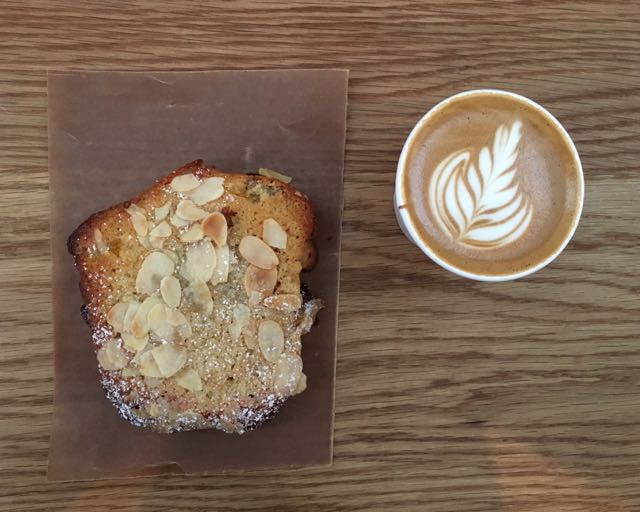
Landrace Bakery

White Sourdough
Landrace Bakery, Bath

It's hard to believe that less than 10 years ago it was difficult to buy a good loaf of bread in much of the UK.  We all know why.  The Chorleywood Process has a lot to answer for.  Not just for propagating bad 'bread' but for turning it into such a cheap commodity that small independent bakeries couldn't compete with the fast, mechanised production process it introduced.  Bakeries disappeared from the high street.  It's been a long haul but now most towns boast a decent baker using traditional leaven methods of baking, though they'll most likely be found well away from the High Street.  Many of us even make our own bread from time to time in homes where pots of sourdough starter rise and fall on many a kitchen work surface.  But it's a time-consuming activity, and it's the time - the thing those Chorleywood scientists were so focussed on reducing - that really matters.  Stripped of the hydrogenated fats, the flour treatment agent, the bleach, the emulsifiers and preservatives we are left with flour, water, salt, which requires an injection of time.  With the return to basics, some bakers are now turning their attention to the quality of the ingredients, which means the grains - the growing, the milling and the using.  And it's this, along with producing excellent bakes that is the focus of attention at Landrace Bakery which opened last week in Bath.

Producing naturally leavened sourdough from organic British-grown stone-milled flours they are already producing outstanding loaves with a moist crumb and really satisfying depth of flavour.  It would be hard to think of a more intimate bakery.  The baking is within easy ogling distance of the counter which is stacked with dough and pastry bakes.  So if you're looking for lunch and can't choose between pumpkin and ricotta pastries or a Westcombe cheese toastie, you can keep an eye on the progress of the sausage rolls puffing up beautifully in the oven.  There's a light-filled cafe area with a window which opens onto the street in summer.

Pastry
at Landrace Bakery, Bath

Sourcing is clearly very important to Landrace Bakery.  Ricotta and cheddar from Somerset's Westcombe Dairy, eggs from Cacklebean Farm in Gloucestershire, butter from Fen Farm Dairy, flours from Gilchesters Organics, chocolate from Pump Street, coffee from Workshop Coffee and fabulously fresh salad leaves from Bath grower Undercliff Urban Farm.  It's an impressive ingredients list which Landrace Bakery are certainly doing justice to.  For the moment they have a small milling machine to experiment with whole grains, and interesting plans for a "flour club" for customers.

You'll find Landrace Bakery close enough to the city centre but off the tourist drag, on Walcott Street.  A few doors down from the Fine Cheese Company, Landrace fits perfectly into what's known as the 'Artisan Quarter' of Bath.  On my visit locals were pitching up to try out the newcomer to the neighbourhood, and they seemed as taken with their new bakery as I was.

So why the name Landrace Bakery?  Broadly speaking,  'Landrace' translates as a 'domesticated animal or cultivated plant which has, over a long period of time, adapted to the local natural environment in which it lives'.  The name, I believe, tells you a lot about the intentions of Landrace Bakery.  This place is only going to get better with time.

Landrace Bakery
61 Walcot Street
Bath BA1 5BN


Friday, 30 March 2018

Fortitude Bakehouse

Sticky Bun
at Fortitude Bakehouse

The aroma of melting cheese and warm Bara Brith is wafting from the open door of Fortitude Bakehouse on a soggy spring morning.  It's a beguiling fusion of savoury and sweet on the nose. Spiced-up dried fruit and the right cheese have a harmonious relationship - Eccles Cake and Lancashire; Christmas fruitcake and Wensleydale; Malt Loaf and, well, take your pick but I'd go for tangy Cheshire.  I've come across a Christmas Cake flavoured cheese, but best not to go there!  At Fortitude today it's, maybe, fortuitous timing that sees me walking through the door to find Eccles Cakes on the counter, just-out-of-the-oven Bara Brith cooling in its loaf tin and Cheese & Leek Batons reaching peak aroma point in the oven.  Symphonic scents.

Fortitude Bakehouse is the new venture of Jorge Fernandez, founder of Fernandez & Wells and Dee Retalli, founder of Patisserie Organic and until recently Operations Manager for Fernandez & Wells.
Slow ferment Sourdough craft-baking, sweet and savoury, and single-farm coffee is their usp but there are gluten-free and vegan bakes too.  Wholesale and take-away is their focus but a strip of the small bakehouse is given over to those who can't wait to tuck-in and there is bench outside too.  A Victoria Arduino coffee machine expresses the single-farm coffee and there is stone-rolled tea from the excellent Postcard Teas.

Fortitude Bakehouse

As far as the waistline goes, it's a dangerous place to linger.  All the preparation and all the results are in full view, and smell.  There's a constantly changing parade of bakes - Dee Retalli clearly has quite a repertoire to place before us - but a slice of that Bara Brith is a good starting point.  Lightly spiced, good dried fruit and a great, satisfyingly chewy (in the best way) texture thanks to the sourdough ferment.  The Sticky Buns are irresistible and the muffins are what you always hope they will be but seldom are.  I've ordered enough bad ones to last a lifetime but my faith is restored by Dee's Carrot and Almond Muffin, not to mention the Bilberry version.  And don't miss the Boiled Orange & Almond  Cake - moist, sharp, sweet, bitter and fragrant.  Or the Bostock, which until now has always failed to hit the spot for me.

Bostock
at Fortitude Bakehouse

Early-morning means a bowl of yogurt with granola (nut-free and delicious) with honey;  you may find a Berber omelette stuffed into a Breakfast Batbout (Moroccan Pitta bread).  There's an unmistakable Moorish influence in the Bakehouse.  By mid-day expect to see a soup on offer, a seasonal salad like a bowl of grains, herbs and roast vegetables, and a Ryebread Tartine.  Bread, right now, is not too much in the frame, - though rye, soda bread and flatbreads make an appearance.  There's a customer appetite for it.  Can they resist?

Carrot and almond muffin
at Fortitude Bakehouse

There are plans for baking classes and workshops and I, for one, can't wait.

You'll find Fortitude Bakehouse right behind Russell Square Tube Station.  The Bloomsbury Mews setting is just right - nicely tucked away and not too prettified.  The old 'Horse Hospital', now an arts venue, occupies the corner site right next door and is the signpost that you need to look for.  Or follow your nose to those harmonious scents of dried fruit, spice and cheese.

Fortitude Bakehouse
35 Colonnade
Bloomsbury
London WC1N

Sunday, 24 April 2016

The Sweet and the Sour

Basic Country Bread
made from the Tartine Bread
by Chad Robertson

It's June in San Francisco and the thermometer, in what I was assured was a temperate city, has hit 93°F.  We take the BART from the city to Berkeley, home of the University of California, and emerge from the subway, scuttling like lizards from one small circle of tree shade to another.  We're early and, if we'd had any sense would have sat in the shade of the wisteria covered entrance of the restaurant until the clock struck one.  But we're young and impatient and anxious not to miss a thing so, of course, we explore Berkeley in the searing heat.  By the time we climb the stairs and claim our table we have turned into a couple of freshly boiled lobsters, vermillion limbed and steaming in the cool café calmness of Chez Panisse.  Glasses of iced water and Californian Zinfandel soon restore our equilibrium.  The food is everything we had hoped it would be: perky, zesty salads, crusty sourdough breads, an abundance of herbs, and aromas of baking, all combining to reassure we were in the right place.  

I should say I am going back a bit and only hope Chez Panisse (the Café) is as good now as it was then, and on the few visits we've managed to make since.  But this is not all about Chez Panisse, even though Alice Waters' has most most definitely influenced my life.  It's about how that early visit to the USA opened my eyes to the sweet and the sour and made me think more deeply about the food I eat.

There was plenty of bad food in San Francisco back then, and still is I'm sure.  In Europe, good food was the norm.  Three weeks travelling around the USA was mostly a culinary disappointment.  America generally was in thrall to ghastly trans-fats and GM foods.  Attitudes, thankfully, are changing.  I'm sure I ate my share of muffins, pound cakes and pastries that owed nothing to the delights of butter.  This may explain why San Francisco made such an impression on me.  Here, if you looked carefully, things were different.  The Farmers' Markets were proof that San Franciscans appreciated their food.  In came the smallholders, farming their land without the 'help' of chemicals and technology, bearing, according to the season, bright green fresh fava beans and peas; white, lavender, dark purple and striped eggplants; red and golden beets; juicy tomatoes in all sizes and colours; and, numerous summer and winter squashes.  In too came raspberries, cherries and apricots in late spring; luscious, perfectly ripe peaches and nectarines in summer; persimmons in autumn; and, sweetly acidic Meyer lemons most abundantly through autumn and into spring.  These markets thrive still, I'm assured.


"All sorrows are less with bread"
Miguel de Cervantes Saavedra

Another indicator was bread.  It was in San Franciso that I first took notice of the term 'sourdough'.  Although I've since learned that  back then 'San Fransisco sourdough' cultures were often used in conjunction with commercial yeast for a better rise.  After two weeks of eating, mostly, tasteless breads, I couldn't get enough of this stuff.  

First attempt Sourdough

Sourdoughs aren't an American invention, of course.  Until commercial yeast was developed all leavened breads were made using naturally occurring yeasts.  French bakers brought their techniques to Northern California during the mid-19th century Gold Rush.  Breads made with ferments derived from yeasts naturally present in the atmosphere have their origins thousands of years ago in ancient Egypt and with nomads throughout northern, central and eastern Europe.  The French have their Tourte de Seigle rye bread, the Germans make Pumpernickel, in Ethiopia teff flour is fermented to make Injera bread, the Greeks have Psomi, and in Denmark, Rugbrød is almost always made using a sourdough ferment because commercial yeasts are unsuitable.  

Years ago I tried to make a starter dough.  The recipe was long and the starter short-lived.  Never progressing beyond the 'cheesy' stage, I dumped the pot and turned to hunting out the best bread around, not an easy job in a country that invented the Chorleywood Process.  About a year ago I was given a present of a copy of Tartine Bread by Chad Robertson.  And there it sat, a reminder of my previous failure as a bread maker.  I knew he was a revered bread maker and founder of San Francisco's Tartine Bakery.   I knew too that he'd honed his craft working with Richard Bourdon, one of the first bakers in the US to revive using the very wet dough and wild yeast leaven practices of French bread makers in the pre-industrial age of bread-making. Afterwards he travelled to Provence and Savoie to work with Daniel Colin and Patrick LePort in search of "the loaf with an old soul" before striking out on his own.

Finally I took the book down from the bookshelf, dusted off my fear of breadmaking and embarked upon the labour of love that is "Making a Starter".  Sweet and sour aromas alternated in the kitchen over the next week telling me when the starter was hungry and when it was sated.  On first reading, the detailed guidance did seem a bit over the top but it did make me pay attention to what I was creating and ten days later I had my first loaf.  It was so beautiful I nearly cried.  OK, I've recovered and realise one loaf does not a bread expert make.  There is still so much to learn.

Living in London, I've got easy access to some of the best bread around.  But I did want to develop my own bread 'starter' because, damn it, everyone seems to have their own now.  I wanted my own so that I never again had to use commercial yeast on those occasions when I did feel the urge to bake a loaf, knock-up some Chelsea Buns or feed that lingering nostalgia for Lardy Cake.  Quantities of flour recommended in the book can be off-putting - well to me anyway - so if you do want to give this starter a go you might, like me, want to refer to the Tartine Bakery Blog which is more up to date.

Homemade sourdough and marmalade

So, as I write, a little pot of starter sits on the kitchen worktop and every morning I take a couple of minutes to feed and water it sparingly, like it is a living being - which, of course, it is.  Its sweet and sour aromas guide me as to its modest needs.  Another pot sits in the fridge, an insurance policy against disaster striking (Chad assures me it won't happen).  Robertson says, "A baker's true skill lies in the way he or she manages fermentation.  This is the soul of bread making."  And now that I have a 'sourdough starter' I have confidence in, it's time to take a fresh look at those European recipes and, maybe, find that elusive Lardy Cake recipe to recreate memories of childhood treats. But will I ever find Robertson's "loaf with an old soul"?


Monday, 4 January 2016

What excites you for 2016?

Celeriac & Ardrahan Pie
at 40 Maltby Street

The last weekend before the return to work and the last party of the holidays.  The hosts are generous, they have the ideal party space, and the food is simply delicious.  It's the perfect start to the New Year.  Maybe because the guests are mostly from the arts world rather than food, and I've successfully switched off from the food side of my life, but I shouldn't have been taken by surprise by the question "What excites you for the coming year?"  He wants to know what new things I think will be interesting, intriguing and inspiring in the food world in 2016.  I open my mouth and nothing comes out for a good 10 seconds.  I'm shocked at my initial lukewarm answers - a couple of promising restaurants openings, some good new voices in food, like the lyrical Rachel Roddy.  But surely it isn't all about the new.  A quick glance back to the food press predictions of 12 months ago confirms how over-excited we can get about all those new restaurant openings and book launches.   How many lived up to promise?

I was still thinking about the question, and my reaction, 24 hours later.  So it's the subject for my first post of the New Year, because if I can't get fired up about what's happening in food in London, there is no point to this blog. For me, and most Londoners, our food lives are mostly about the tried and tested  favourite restaurants, producers,markets, shops and bars.  I'm as likely to tell you about a restaurant that's been around a while as I am to introduce you to a new one - plenty of other people are doing that and by the time I've satisfied myself they are not a flash-in-the-pan, they are no longer the newest.  But here goes.  Firstly, 2015 restaurants I haven't yet managed to get to include Bao in Soho (I love their pork buns but not the pavement queues here at their permanent home); The Good Egg in Stoke Newington, serving up all-day Middle Eastern breakfasts; Lurra in W1, which describes itself as a "Basque Grill" and is sister to one of my favourite places, Donostia, next door - excellent meat and fish, I'm assured; Kitty Fisher's in Shepherd Market - I like the sound of everything that comes on the menu but I'm no good at booking ahead; Pizza Locadeli where Giorgio Locatelli has created a pop-up pizza joint.  It may sound an unlikely diversion for the chef behind Locanda Locatelli unless you remember Spiga in Soho's Wardour Street which opened in 1997.  In its early days when, Locatelli was involved, it served up the best pizzas and pasta in town and it was a sad day when he cut loose.  Originally Pizza Locadeli was meant to end its short life at Christmas but will now, I hear, go into March 2016.

As usual, there have been plenty of announcements for the coming year but the ones that have caught my attention are Clare Smyth, having just cut her ties to Gordon Ramsay, planning to set up her own restaurant in London; Portuguese chef Nuno Mendes returning to his Viajante roots in Wapping (if he can raise enough crowdfunding cash); Monica Galetti setting up Mere in Fitzrovia's Charlotte Street after leaving Le Gavroche; and Greg Marchand arriving from Paris to set up Frenchie in Covent Garden.

Page from
30 Ingredients by Sally Clarke

There are voices in food well worth tuning into.  One book that just managed to squeeze into 2015 sounds well worth a read - First Bite: How We Learn to Eat by Bee Wilson explores where our food habits come from, how we can influence our childrens' tastes and change our adult ones for the better.  Joanna Blythman's Swallow This was a must-read in 2015 with insights into the reality of the modern food processing industry.  On the cooking front, one of the freshest voices has to be that of Olia Hercules, whose first book Mamushka hit the bookshelves in 2015.  She is everywhere right now with recipes and stories straight from her Ukrainian heart and a work ethic to go with her talent.  And soon we'll have Rachel Roddy's second book - expect it to be laced with her lyrical prose along with excellent recipes.  Her first, published in the UK as Five Quarters: Recipes and Notes from a Kitchen in Rome is coming out in Canada and the USA in early 2016 with, for some reason, a name change to My Kitchen in Rome: Recipes and notes on Italian Cooking.

Edmund Tew
from Blackwoods Cheese Co

We all have our favourite shops and producers.  In London when a loved small producer sells out to big business it doesn't go down well with the customers and when it's a brewery it cuts deep. The end of 2015 saw London-based Camden Brewery take the money and run.  Other producers I like who are still doing it their way, and doing it well, include Bermondsey-based The Kernel Brewery, just a few doors up from cheesemaker Bill Oglethorpe of Kappacasein whose Bermondsey Hard Pressed, along with a few other cheeses, is maturing nicely.  His cheese toasties from a stall at Borough Market still can't be beaten - many have tried.  Another cheesemaker to watch is Blackwoods Cheese Co based in Brockley, South London.  Starting out with a simple, delicious feta-like cheese, Graceburn, sold in jars, they've added Edmund Tew and William Heaps to their range (named after convicts who were transported to Australia's penal colony for stealing cheese!). These guys know what they're doing.

I can't fail to get excited by bakeries.  Good bread used to be really hard to find in London but these days you don't have to go far to find a decent loaf or croissant - E5 in London Fields, The Little Bread Pedlar in Bermondsey, Brick House Bread in East Dulwich, Hedone in Chiswick, Bread Ahead at Borough Market, and Brixton-based Brockwell Bake being among the most notable.

Cinnamon Bun and coffee
at Brick House Bakery

A lot of these small producers are able to sell direct but London's small independent food , coffee shops and markets are invaluable in making them available beyond the close range of production.  Here are a few, The Quality Chop House shop on Farringdon Road; General Store in Peckham; Leila's Shop in Shoreditch; Jones of Brockley; Neals Yard Diary in Covent Garden and Borough; Sally Clarke's Shop in Kensington; Monmouth Coffee in Covent Garden and Borough; Fowlds Cafe in Camberwell; and La Fromagerie in Marylebone and Highbury.  It's not easy being a small independent shop in London.  I wish there were more because without them I wonder if some of London's small producers would have a local market.  Weekly food Markets are all over London, Some of the best being Brockley MarketCrystal Palace Food MarketHerne Hill Market; and, London Farmers' Markets.

I'm not one for resolutions but this year I have plans to get out of London more and try places like The Sportsman in Seasalter and the Arts Cafe in Aberystwyth, but where London's concerned there's plenty to interest, intrigue and inspire.

Now, ask me that question again, just don't expect my answer to be all about what's new.


Thursday, 9 July 2015

Honey & Co The Baking Book

Page from Honey & Co The Baking Book
Baked Apricots with marzipan filling and almond crumble
Photograph by Patricia Niven ©


"Our days are governed by the rhythm of the pastry .... ".  For Honey & Co, this tiny restaurant in a London backstreet, it's the pastry section that provides the essential underpinning to their busy days, from breakfast to end of dinner treats.  Here is the book that has been so anticipated since last year's publication of Sarit Packer and Itamar Srulovich's much loved debut Honey & Co Food from the Middle East.  I wrote about the 2014 book here.  Where the first book concentrated mostly on savoury Middle-Eastern food, The Baking Book offers recipes for sweet and savoury bakes, with the emphasis on the sweet ones.

Baked apricots with marzipan filling and almond crumble
baked from Honey & Co The Baking Book

Cakes are a big part of the book, even though the original plan for Honey & Co the restaurant didn't include a single cake.  Finding premises with a big picture window changed all that.  Cakes were the lure to attract customers in - the swivel of the eyes as they pass by.  I've done it myself and can confirm how effective a hook that window display is.  Colour to draw the eye, spices, orange blossom and rose waters to make the nose twitch.  All heavenly stratagems are employed.  But there are no deceptions here.  The bakes live up to expectations.

Chocolate & pistachio cookies
baked from Honey & Co The Baking Book

If this was simply a book of recipes, it would be very good - how could it not be, when it covers all of the Honey & Co customer favourites.  But it's the look behind the scenes from 'Dead of night' and 'First light', through the long daily flow of staff and customers, to the snuffing out of the candles, that makes it very good indeed.  In this book Sarit takes centre stage, the driving force for the baking with Giorgia the pastry chef who "lights up when she talks about cakes".  The purple folder of recipes from Sarit's baking life is the starting point.  Then the creative and collaborative work begins - helped along by tastings by staff and regulars and the need to fulfil Itamar's pastry dreams.  The results find their way to table and counter and, now, into this book which "has our favourite recipes .... and the best of all of us".

Raspberry & lime jam
cooked from Honey & Co The Baking Book

Sarit's tips on 'How to be good at baking' are a fine start to the book, with guidance on the use of sugar, eggs, cream, butter/fats, nuts and seeds, as well as excellent advice on ingredients like chocolate, "if I don't want to steal a piece, I shouldn't be baking with it".  The 'Store cupboard' yields up the likes of Strawberry & rose and Black fig, cardamom & orange jams, Amalfi lemon & rosemary marmalade, Candied quince, sweet and savour spice mixes and sugars.  You can breakfast on sticky Fitzrovia Buns  with sour cherries and pistachios (a personal weakness); a dish of Shakshuka (eggs cooked in spicy tomato sauce); Burnt Aubergine burekas (pastry parcels); or buttery Kubaneh, one of the intriguing "three strange Yemeni breads".  Mid-morning could have you feasting on Feta and courgette muffins or Fig, orange & walnut cake.  But then again there is Tahini & white chocolate plait and Pear, ginger and olive oil cake to consider.  Lunch could be a Balkan cheese bread; a spicy Pigeon pastilla; or Leek & goats' cheese pie with an out of the ordinary cheese pastry.  And suddenly it's teatime and we're at page 179 which doesn't even bear a recipe.  What it has is one of my favourite pages of writing in the book as it gives a flavour of the restaurant routine at that particular time of day.  But turn the page for Blood orange & pistachio cakesOrange blossom & marmalade cakesBlueberry, hazelnut & ricotta cake; and Chocolate sandwich cookies filled with tahini cream.  'After Dark' we have sweet, salty, crispy Knafe fragrant with cardamom and orange blossom water; Poached peaches with rose jelly & crystallised rose petals; and, maybe, some pistachio and rose petal Halva.


Peach, vanilla & fennel seed loaf
baked from Honey & Co The Baking Book

I can never write a review without first trying out some of the recipes.  What did I make?  A ruby-red Raspberry & lime jam with citrus and spice notes from the use of fresh and dried limes; soft, yielding Chocolate & pistachio cookies; fragrant Peach, vanilla & fennel seed cake; and a luscious dish of floral, lightly-spiced Baked apricots with marzipan filling & almond crumble.  I made Honey & Co's recipe for Marzipan with orange blossom water for the filling and I swear I will never buy ready-made again.

Slice of Peach, vanilla & fennel seed loaf
baked from Honey & Co The Baking Book


This is a book for those who like a good read along with their cake.  A true taste of Honey & Co the restaurant, a place I know well.  The photography, by Patricia Niven, is every bit as beautiful as her photos in the first book.  This is a Baking Book well worth the wait.


Honey & Co The Baking Book

Book courtesy of Salt Yard Books, an imprint of Hodder & Stoughton

Sunday, 15 March 2015

How to Boil an Egg by Rose Carrarini

Egg in the Middle
from How to Boil an Egg - Rose Bakery
by Rose Carrarini
Illustration by Fiona Strickland

There seems to be no let-up in the trend for cookbooks based on one prime ingredient.  In recent years we've seen In Praise of the Potato by Lindsey Bareham, Le meilleur et le plus simple de la pomme de terre by Joël Robuchon, Bacon by Michael Ruhlman, and The Tomato Basket by Jenny Linford.  Ruhlman followed his Bacon book up with the 2014 publication Egg: A Culinary Exploration of the World's Most Versatile Ingredient.  But before Ruhlman turned his pen to the egg came Jan Arkless with How to Boil an Egg in 1986. Within the past decade we've seen The Good Egg by Marie Simmons; Michel Roux's Eggs; Jennifer Trainer Thompson's The Fresh Egg Cookbook; Lara Ferroni's Put an Egg on It; A Good Egg by Genevieve Taylor; and the latest addition to the pot, Blanche Vaughan's Egg.  The egg's protein-packed versatility makes it the perfect food and so the books keep on coming.


Rose Carrarini's How to Boil an Egg, hit the bookshelves in 2014.  The choice of title surprised me as I had fallen for the media myth that Delia Smith had got there first with that one.  In reality, Delia devoted the first three chapters of her 1998 How to Cook book 1 to the subject of eggs, including instructions on exactly how to boil an egg. The fact she had the audacity to suggest anyone might not know how to boil an egg brought a degree of media ridicule not shared by her grateful readership and Delia had the last laugh with phenomenal book sales. Whatever you think, her advice "If you want to learn how to cook, start with eggs" remains excellent advice, I think.


My favourite of the clutch, Rose Carrarini's book is truly all about the egg and shows just what an essential role it plays in our cooking. Whether it's the star or has a supporting role, here the egg carries the dish.  Based on the cooking for her Anglo-French bakery and restaurant Rose Bakery in Paris, means she offers some more unusual recipes and twists on the expected classics.  Continuing the theme of her first book, Breakfast, Lunch, Tea, this book is presented in chapters.  'Eggs for Breakfast' offers Chocolate Orange Muffins and Lemon Pancakes as well as Egg in the Middle and Eggs Baked in Dashi.  'Eggs for Lunch' range from Poached eggs in Tomato and Fennel Broth through gratins, tarts and salads to Japanese inspired 'Chawanmushi' savoury custards.  'Eggs for Tea' offers treats like Purple Corn and Blueberry Cake, Green Tea Genoise, Îles Flottantes, Deep Custard Tarts and a Semolina Pudding that might just banish all memories of school lunches.  Low sugar and gluten-free are something of a passion too.

I've tried several of the recipes in this book and I have to say it is not without the odd editing error or omission - one recipe forgets to mention the essential component in the ingredients list, another doesn't supply the oven temperature.  It's not a hand-holding kind of book in the manner of a Delia but the small mistakes are pretty obvious so you can't go far wrong.  In another of the 'Egg' books the instructions for 'scrambled eggs' extend to a page and a half, so I'm relieved to say that here they take up a mere three sentences.

Purple Corn and Blueberry Cake
from How to Boil an Egg - Rose Bakery
by Rose Carrarini
Illustration by Fiona Strickland

And if you're thinking how beautifully photographed the dishes are, look again.  Illustrations are by
Fiona Stricklanda botanical artist who has made an intriguing diversion into food illustration. Different painting techniques had to be explored, including the use of opaque watercolour mixes and a lighter weight of paper.  Shades of white had to be painted-in rather than Strickland's usual technique of allowing the white of the paper to shine through colour to provide highlight and contrast.  The results are, mostly, astonishing.  From the moist crumb and sticky glaze of Purple Corn and Blueberry Cake, to the luscious dish of caramel-drizzled îles Flottantes, you can't quite believe what you are seeing.  My favourite illustration, perhaps, accompanies a recipe for Egg in the Middle (at the start of this piece) where the crispness of the fried bread and the just-cooked egg are so perfect you want to reach for a knife and fork.

Eggs Baked in Dashi
from How to Boil an Egg - Rose Bakery
by Rose Carrarini
Illustration by Fiona Strickland

Here's my adaptation of A Simple Apple Flan.  I like it particularly because rather than being predictably encased in pastry, it's held together by eggs, a touch of corn flour and a layer of caramel. It's light and, despite the caramel layer, slightly tart from the lemon juice which is there more than to simply prevent the apples from oxidising.

A Simple Apple Flan
from How to Boil an Egg - Rose Bakery
by Rose Carrarini

A Simple Apple Flan
(Serves 6)

150g (5½oz or ¾ cup) Caster sugar
Juice of 1 lemon
60g (2oz or 4½ tablespoons) butter, diced
1kg (2¼lb) cooking apples such as Bramleys
3 eggs, beaten
1 tablespoon cornflour (cornstarch)

Pre-heat the oven to 140C(fan 120C)/250F/Gas(oven temperature was missing from the printed recipe so this is my advice)
Heat 100g caster sugar and 2 tablespoons of water in a small, heavy-based pan over a high heat, gently swirling the pan to dissolve the sugar.  Then boil without stirring for 4-5 minutes to achieve a smooth caramel.
Remove the pan from the heat, add half the lemon juice and 25g butter and mix well.
Pour the mixture into a round ovenproof dish (or smaller dishes) to cover the base and set aside.
Peel, core and slice the apples.  Put them in a stainless steel pan with the rest of the lemon juice and cook over a low heat to a soft purée.  Stir in the remaining sugar.
Remove the pan from the heat and stir in the beaten eggs, the remaining butter and the cornflour.
Pour the mixture over the caramel and bake for about 30 minutes until it has firmed slightly.
Remove from the oven, allow to cool then refrigerate overnight.
Just before turning out the flan, place on a low heat for a few minutes to release the caramel base then invert onto a serving dish.  
Serve with custard or double cream.


How to Boil an Egg by Rose Carrarini - Published by Phaidon