Showing posts with label Soup. Show all posts

Sunday, 30 October 2016

White bean and chicory soup

White bean and chicory soup

When the chill air of late autumn arrives, so too does my craving for the bitter qualities of chicories.  And this is their season.  Descended from wild greens, sometimes considered weeds, they add a colour and flavour punch to the diet just when the harvesting options for us gardeners have otherwise shrunk to mainly root crops.

As Jennifer McLagan points out in her book Bitter - a taste of the world's most dangerous flavor, with recipes, we have a natural wariness to 'bitter'.  Many poisons are bitter so it's an understandable inherited aversion developed for our own protection.  The reaction is strongest in babies but with age comes a loss in taste buds and the learning that not all bitter foods are bad but can be enjoyable and good for our health.  We can even develop a craving for bitter - chocolate, coffee and tea being the most obvious examples.  It's known that bitter flavours can stimulate the appetite and if our early food experiences exposed us to them we are more likely to enjoy the qualities of bitter - Bee Wilson's book First Bite - How We Learn to Eat is excellent on the subject of our likes and dislikes.

The list of 'bitter' foods is subjective as not everyone experiences bitterness in the same way.  Seville oranges and beer surely are, but what about turnips and swedes?  It's an interesting subject, tackled well by Jennifer McLagan who goes so far as to suggest that "food without bitterness lacks depth and complexity".  If we consider the wide range of foods that have a bitter quality, it's an interesting theory.

The first fog of autumn has arrived today and with it has come requests for soup.  Not the first bowl we've had this autumn but the first call for its warming, soothing virtues.  This one demands a little thinking ahead so is not for today but it is ideal for countering the late autumn/winter gloom stretching ahead of us.  It takes dried beans for its structure and bitter chicory to wake up the taste buds.

Cicoria Catalogna Pugliese

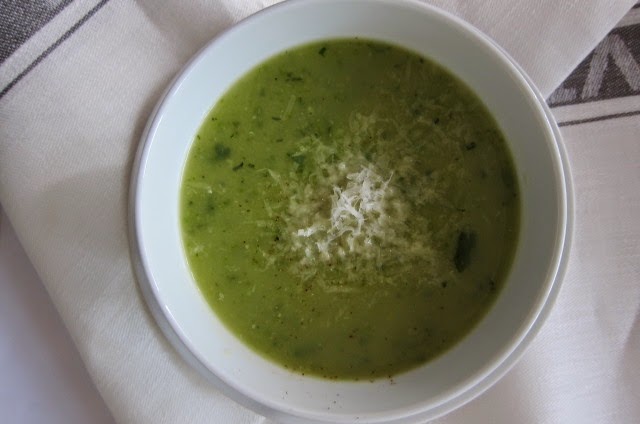
My recommendation to use 'chicory' here is loose as chicory, endive and radicchio are all members of the broad chicorium family but local names vary.  It's the dark green chicories that work best in soup, for me.  For the soup I photographed at the top of this page, I used an Italian Cicoria Catalogna Pugliese, a large upright chicory with long serrated leaves.  I wish I could say I grew it but it's not a variety I've tried on my patch of ground.  I suspect heavy clay is not ideal.  You could use the outer leaves of either Cicoria Puntarella or Escarole.  The milder hearts of both are good in a salad, particularly with bacon or anchovies.  All of these are not too difficult to find in a good greengrocers. If you use a red variety of chicorium, bear in mind it will turn a khaki-brown when subjected to heat.

I favour white Cannellini beans for this recipe.  Also known as haricot, go for the the longer of the two main varieties of this white bean (rather than the more rounded one which is favoured for baked beans).  It has a creamier consistency, I think, which works better in soups.  Butter beans would be a good alternative, or the white bean typical to your area.  You could use pre-cooked tinned beans too, but they won't absorb flavours in the same way.  The longer you store dried beans the more time they will take to cook.  I try not to buy them too far in advance but we've all found a forgotten bag of beans in the larder.  Here is a good tip from Monika Linton's book Brindisa - the True Food of Spain for beans that are being slow to absorb liquid: "you need to 'frighten' or blast the beans, so once they break into their first boil, throw in some cold water to halt it" then bring the pan back to the boil.  Never add salt until they are fully cooked as it hardens the beans.


White bean and chicory soup
(serves 4)

250g dried cannellini beans (500g cooked) or other white beans, soaked in plenty of cold water for 12 hours
1 small carrot/1 small onion, halved/1 small stick of celery (for cooking the dried beans)
2 tablespoons olive oil
1 large onion, diced
1 large carrot, diced
1 stick of celery, diced
2 cloves of garlic, chopped
A small dried chilli, crumbled (optional)
A large handful of chicory leaves and stems
Salt and pepper
Parmesan and olive oil to serve

Drain the beans.  Put in a pan with the small carrot/onion and celery and cover well with fresh water.  Bring to a fast boil and cook for 10 minutes before turning the heat down to a simmer.  Cook about an hour or until the beans are soft (time will vary according to freshness), topping up the water to ensure the beans are well covered.  Discard the vegetables but not the cooking liquor.  Season with salt and pepper.  

In a large pan, heat the olive oil gently, add the diced onion, carrot and celery.  Cook for 10 minutes.  Add the garlic and cook to soften but not brown.  Add the dried chilli now, if using, and cook for 1 minute more.  Add the beans and their liquor and bring the soup to the boil before turning down and simmering for 20 minutes.  Blitz briefly with a hand whisk, just enough to turn the consistency a little creamy.

Chop the chicory leaves and stems roughly and add to the pan.  Simmer for a further 10 minutes, adding more fresh water if you feel the consistency is too thick.  Taste and adjust seasoning. 

Serve in bowls with grated parmesan and a slick of good olive oil for an extra kick of bitter.


Thursday, 21 August 2014

Summer to autumn by way of Fried Courgettes

Fried courgettes (Zucchini scapece)

Jane Grigson credited Elizabeth David with introducing Brits to courgettes, asserting "She was the first to relieve courgettes of their italics".  David wasn't actually the first to offer a recipe to the British market but before David wrote her book Mediterranean Food in 1950, courgettes were largely unknown of here.  The Cucurbit genus came to us mainly in the form of marrows and, if you had access to a greenhouse, there were cucumbers and melons to try growing.  It is only in the last few decades that we have also come to appreciate the merits of pumpkin and squash.  If only we hadn't been focussed on growing those large, watery marrows we wouldn't have taken so long to appreciate the courgette.  These days, there are specific seed varieties bred for courgette and marrow production although they come from the same family and a courgette can still grow to marrow proportions if you let it.

At this time of year those of use who grow our own can never get enough recipes for using courgettes.  Fruits the size of stubby pencils can swell to monstrous proportions within 2-3 days if you don't keep a close eye on them.  If growing is not your thing you'll want to skip to the end of this piece for the recipe because this is the one time of year when I have the time and opportunity to share some gardening photos taken over the past week.  If you do read on, however, you will find links to earlier recipes you might like.

Yellow courgettes

I never seem to get around to writing about the allotment in June or July.  There's far too much planting and picking to get time to write about it.  Looking back, it's May and August when I feel the urge to tell you what's happening on Plot 45.  Unlike this time last year, there's no denying there's a touch of autumn in the air.  The first sign for me is a change in light rather than temperature, but cooler nights have definitely arrived.  This time of year suits me, not least because I can sleep at night.  Growth has slowed down a bit, no more frantic picking of luscious raspberries before they tip over from perfect to spoiled in the space of 24 hours; no more trying to hide my precious blackcurrants from marauding birds; and no more livid scratches on arms earned reaching for the last of those sweet golden gooseberries... Until next year.

Raspberries 'Autumn Bliss'

Not that I'm finished with raspberries yet.  Autumn Bliss is just getting into it's stride, but it's slow-pick-pick-slow for autumn fruiters.  They may be less prolific than the high-summer berries, but their deeper flavour more than makes up for that.  It's earlier than last year but a reminder of Blueberry & Raspberry Mascarpone Pots seems appropriate now that we may be gathering the last of the berries and you need to make a little go a long way.

Borlotti Beans

And now come the borlotti beans.  Definitely a harbinger of late summer.  My favourite way of using them freshly picked is in, punchy, Borlotti Bean Bruschetta.  Dried in their pods for a couple of weeks, they store really well for re-hydrating and adding to soups and stews when the temperature really drops.  This year's crop was grown from a handful of beans squirrelled away last autumn. The wigwams of lush green growth hide long, broad green pods which turn to deep pink with white marbling maturing through to purple/red if you leave them long enough before picking.  Once you can feel fat beans inside the pods, get picking.


Changing seasons fruits

This week's haul of late raspberries, juicy wild blackberries and unknown varieties of plum and apple makes it difficult to argue summer is nearly over.  It is the perfect excuse for looking to this Almond, polenta and lemon cake with Blackberry Compote or this Plum Tart, or even Raspberry Ripple ice cream if you have enough berries.


Calendula

Growing calendula (marigold) on the allotment is the best way to hold onto summer.  It's the plant that just does not want to stop flowering.  Once planted, it will also never go away as it self-seeds prolifically.  Having to weed out new plants that come up just where you don't want them next spring is a small price to pay for the joy of having the yellow/orange blooms right through into late autumn.

Courgettes and Pumpkins

Growing biodynamically, I'm constantly on the look-out for slime trails and white dust in the cucurbit patch but courgettes and pumpkins are going strong and, incredibly, are pretty much free of slug/snail damage and powdery mildew this year.  Once courgettes get going they come thick and fast so here are a couple of favourite recipes: a surprisingly creamy Courgette Soup and Courgette, lemon & thyme linguine.

Happily for us Brits, by the time Elizabeth David was ready to publish here book French Provincial Cooking in 1960 she could write "Enterprising growers are supplying us with little courgettes as an alternative to gigantic marrows".  So, here's another recipe.  Fried courgettes or more properly Zucchini Scapece (meaning marinaded in vinegar and mint) as it is surely the Italians who are the courgette's greatest appreciators.  It's based on the the recipe in Claudia Roden's The Food of Italy.  My copy is the original 1989 version so hopefully the recipe is in the new updated version published earlier this year.  I know in Italy it would be served as a separate course but I also like it alongside roast lamb.

Fried Courgettes (Zucchini scapece)
(Serves 4)

500g (3 medium) Courgettes sliced diagonally, about 4mm thick
Salt
1 clove of garlic, whole
1 clove of garlic, very finely chopped
Extra virgin olive oil
1 small dried, deseeded, chilli crumbled
A handful of fresh mint, chopped
1 tablespoon wine vinegar (I prefer Moscato vinegar but red or white wine vinegar will do)

Salt the sliced courgettes lightly and leave them to release water for up to an hour (if the courgettes are small you won't need to salt them but do let them release their water).  Pat dry thoroughly with kitchen paper.
Use enough olive oil to just cover the bottom of a large frying pan.  Add one clove of peeled garlic and heat to soften and brown lightly before removing and discarding it.
Fry the courgette slices in batches to brown on both sides.  Drain on kitchen paper.  Layer in a serving dish with the chopped garlic, chilli, mint and vinegar.  Serve at room temperature.


Monday, 20 January 2014

Potluck harvesting and planning to plant

Cabbage January King

The allotment is no place to be on a January day.  Especially this year when rain and wind have done there worst  Boots squelch in the sodden ground and over-wintering alliums sulk in a watery grave.  Still it takes only the promise of a sunny day to feel the tug of temptation to 'just check everything is OK'.  The "everything" right now being the aforementioned onions and garlic and a row of leeks, a few brassicas and some frustratingly small parsnips.  It's a potluck visit at this time of year.

Potluck:  " take a chance that what is 
available will prove to be good "  

Fat-bellied wood pigeons heave themselves into airborne flight at my approach.  So far their efforts to strip my cabbage patch have been successfully thwarted thanks to a fiendish construction involving a wooden frame, heavy mesh and tent pegs.  These are possibly the most expensive greens ever grown but at least I'm winning, and that's what matters - right?

Leeks and chard


There's little to be done, save for checking that I tied-in all the summer-fruiting raspberry canes to avoid wind damage, but now is when there's time to think and plan.  The bed currently hosting those oh so tempting brassicas will, this year, I decide, be turned over to fruit growing.  The rhubarb crown I split has taken well, there, and a delicious crop of blackcurrants last year has convinced me you can never have too many blackcurrants.  Yes, the blackbirds love them but I've got the measure of them now.  Maybe a redcurrant bush would be good?

There's time to consider what else grew well last year - it has to be all the soft fruit and the borlotti beans; what wasn't worth the effort - peas (those blasted pea moths!); what I'd like to try this year - celeriac "Prinz", for one; and whether growing an old favourite is the 'right' thing to do.

The crop I'm agonising over is potatoes.  The very first vegetable I planted when I took on my plot - mostly because it's such a good crop for breaking up the ground.  Although I didn't have any problems with the two varieties I planted in 2013, incidents of blight seem to be increasing.  In response I lifted my maincrop "Pink Fir Apple" quicker than I would have liked.  I could grow a blight resistant variety like "Sarpo", but it's not a potato I'd choose to eat, so why would I.  I've reached a compromise.  Blight needs warm, moist conditions and usually strikes from mid-summer onwards, so this year I'll sow 2nd early Charlottes only.  I'll be digging them up in early July and they keep pretty well, so we'll see how much we miss a main crop.


I'll also be trying some comparison planting using my own saved seeds versus bought seed - Borlotti bean and pumpkin, in particular.  This year I will label diligently and not mix them up, so hope to have some conclusions for you.

Today there are signs of good things to come.  The blackcurrant bushes bear fat buds and the ever-reliable gooseberries can't wait to get going.  The spring broccoli plants are thick-stemmed and leafy, though not exactly upright.  In protecting them from marauding pigeons I failed to notice their sideways trajectory until it was too late - a novice mistake.

The fate of the over-wintering alliums is in the balance in this sodden ground.  I can live with an onion failure as I'll be planting more in spring.  Garlic is another matter as spring-sown garlic is never successful on this ground.

Six months seems a long time to wait before I'll be bringing home a varied harvest.  In the meantime, my potluck haul today is leeks, black cabbage, parsnips and a few leaves of chard. The makings of a 'potluck soup'.  A couple of shop-bought carrots and a little pearled spelt grain and I have a filling winter lunch.

Potluck soup with pearled spelt grains

Nobody needs a recipe for 'Potluck Soup'!


Regular readers of this blog will have noticed I've gradually cut down on the frequency of my postings as I've had less time to devote to it.  In 2014 I plan to post on this blog monthly unless there is something urgent I want to talk about.  

Monday, 27 September 2010

Courgettes for all

Courgette plant - Striato di Napoli

If you've grown courgettes this year you'll know what a great year it's been for this crop.  If you have friends growing them you will, by now, be less and less tactfully declining yet another offering.  For this reason you can never have too many courgette recipes up your sleeve.  This year I've resorted to giving courgettes away by the bagful together with a copy of this brilliant recipe for a surprisingly creamy Courgette, Basil and Parmesan Soup below (with heartfelt thanks to Lindsey Bareham).  If you are new to vegetable growing, courgettes are a great crop to start with.  Don't plant them closer than 1 metre apart, give them a good dousing of water every couple of days if rain is sparse or non-existent, and they will romp away.  Personally I have neither the patience nor the space to grow them from seed indoors so I plant the seeds straight into the ground in mid-May.  They will be ready to pick from mid-July and can go on until end of September.


Courgette Soup

This year I've grown three varieties but the yellow Soleil is by far the tastiest, taking on a lovely nutty, caramel flavour when sliced and cooked on a hot griddle.  If you grow the round Italian Ronda de Nizza, as I did, keep a close eye on them as they can erupt from cricket ball (the perfect size) to football in the blink of an eye.  If this happens to you, with whatever variety, you need never again think of that ghastly fallback 'stuffed marrow'.  This soup recipe will accommodate the overblown monsters happily and be far more rewarding of your effort.


Courgette, Basil and Parmesan Soup (a Lindsey Bareham recipe)
(serves 4-6.  Good hot or cold))

750g courgette or marrow
125g spring onions or 1 medium onion
25g butter
2 medium-sized new potatoes
1 garlic clove
Half a lemon
750ml light chicken or vegetable stock
20 basil leaves
4 tblsp freshly grated parmesan

Trim and grate the courgette.  Spread in a colander and sprinkle with 1 tblsp of salt, leave to dry out.  Trim and finely slice the onions.  Melt the butter in a spacious pan, stir in the onions, season, cover and cook, stirring occasionally, over a medim-low heat for about 10 minutes until slippery soft. 

Scrape the potatoes and chop small.  Crush the garlic.  Remove the zest from half the lemon.  Stir potatoes, garlic and lemon zest into the soft onion, cover and cook for a couple more minutes. 

If using stock cubes, dissolve in 750ml of boiling water. 

Squeeze as much liquid as possible out of the grated courgette and add to the pan.  Cook, uncovered, for 2-3 minutes and add the stock.  Bring to the boil and cook, partially covered, for about 5 minutes until the potatoes are tender.  Add the basil then blitz.  Stir in the parmesan, taste and adjust the seasoning with salt, pepper and lemon. 

Nb.  If you don't have basil, thyme works but there's no doubt that the use of basil makes this recipe special.