Tuesday, 12 October 2010

Oviedo - Bar Punto y Coma

Punto y Coma, Oviedo

Could this be the most perfect bar in the world?  Visiting Oviedo in June, in what was supposed to be the sunniest month of the year in northern Spain, left me in no doubt why the lush green Asturias region is renowned for its dairy products.  At such times finding a good bar is essential and a great bar can make even four days of unceasing rain bearable. Having practically lived in Punto y Coma, I doubt I will ever find a better bar.

If you're looking for stylishness or great music, you won't find it here.  So how did it draw us in?  Well, in the circumstances, opening hours of 06.30-01.30 was a good start.  Good value wines, Jabugo hams, great service and an instantaneous feeling that you are in good hands contributed.  Venerable, no-nonsense barmen moved like a ballet behind the long bar, never making body contact no matter how busy (and boy were they busy).  On our fifth visit we got our first smile.  We had proved we appreciated how they did things and were now as welcome as the locals.    

The food is entirely absent of artistry or gimmicks.  Dishes are simple and traditional, and I dare say haven't changed in decades.  We breakfasted on top-notch cafe cortado and perfect golden, chewy bocadillos stuffed with melting Jabugo jamon whilst waiting for the hands of the bar clock to reach 10.00.  This signalled the cooking of delicious, featherlight individual tortillas (tortilletis) within sight, and smell - completely irresistible.  Office workers and early shoppers drifted in and out continuously for their regular orders.  The heavier the rain came down, the more tots of rum found their way into the coffees.

A three-course lunch for 10 Euros can be easily found in Oviedo. Thanks to General Franco and his menu del dia (menu of the day), every restaurant in Spain is still obliged to offer a good, substantial lunch for workers for a small sum.  At Punto y Coma we ate Sopa de Pescado (fish soup) and a Fabada Asturiana (an Oviedan traditional stew of meat and beans).  Followed by main courses of Ternera Gobernada (a veal stew) and Parrochines frites con taquines de jamon (fried sardines with pieces of ham).  We somehow found room for Arroz con leche (the rich and creamy rice pudding with a caramelised topping).  A glass of decent wine and a cortado were included in the 10 Euro per person bill.  For quality ingredients cooked and served with pride it is amazing value.  There is a smart restaurant beyond the bar, but eating there you don't get the ever-changing parade which makes eating in a strange city so beguiling (for me anyway). 
 
The Asturias is a beautiful region and central Oviedo has plenty to see.  There are traces of occupation since the 1st century and King Alfonso II chose it as his royal seat in the 8th century.  A whole millenium of art from the 8th to the 18th century is represented and the architecture has Visigothic, Roman and Nordic influences.  The Pilgrim's route to Santiago de Compostela runs through Oviedo.  The food is hearty and the region is renowned for dairy products, seafood, dried beans, and ciders (there are plenty of cider houses - Sidrerias - in which to slake your thirst).  Oviedo has an excellent small covered food market in the centre of the old town - El Fontan just off Plaza Ayuntamienta and backing onto the beautiful Plaza del Fontan.

Visiting Spain, rain was not in my plans, but I am grateful for the four day deluge.  Who knows, if it hadn't rained, I may never have found Punto y Coma - unthinkable.

Punto y Coma
Calle Suarez de la Riva 5, 33007 Oviedo, Asturias, Spain
http://www.restaurantepuntoycoma.com/

Wednesday, 6 October 2010

Allotment Minestrone

Allotment Minestrone

There's nothing like cultivating an allotment for encouraging creativity in the kitchen.  But this time of year, when the last courgette has been picked, onions and potatoes lie snuggled dry in hessian sacks and the rain hangs heavy on spent drooping beanstalks, is the perfect time to mix it up.  This is my minestrone- infinitely variable depending on what is available.  The point is to use as much home-grown produce as possible.  The buzz you get from serving up 6 months of tender loving care in a bowl makes all that weeding well worth the effort.

The ingredients below represent what went into the soup pictured but are a guide only.  Other vegetables can be substituted.  Look for a balance of ingredients so that no one vegetable dominates.  This is a soup which tastes even better a day or two after making, so I always aim for a large panful.

Allotment Minestrone (makes around 3-4 litres)
*250-300g dried Borlotti beans (or other dried beans), soaked overnight and simmered until cooked (boil vigorously for first 10 minutes)
2 tblsp olive oil
1 large onion, chopped
2 cloves of garlic, chopped
2 medium leeks, chopped in half and sliced
3-4 medium carrots, diced
3 celery stalks, diced
2 medium potatoes, diced
2 medium courgettes, diced
8 fresh skinned tomatoes, chopped (or 2 x 400g tins tomatoes, chopped)
6-8 leaves of Cavolo Nero, de-veined and sliced

Tip: The discarded rind from a chunk of parmesan adds depth to the soup but remove before serving.

To serve: Pesto or basil & freshly grated parmesan

Gently heat the oil in a large pan.  Add onions, garlic, carrots, celery and cook over a medium heat for 5 minutes.  Add potatoes and cook for a further 5 minutes.  Add courgettes, tomatoes, the cooked Borlotti beans and enough cold water to well cover the vegetables.  Bring to the boil and add the Cavolo Nero (and the parmesan rind if using), salt and pepper.  Simmer for about 20 minutes until vegetables are yielding but still have a little bite.  Check the seasoning.  Allow to cool a little before serving with pesto or basil and freshly grated parmesan.

*I used half home-grown borlotti beans which I had dried the previous year and half shop bought.  It was very noticeable that the shop-bought ones took far longer to cook (2 hours) so don't believe the timings printed on the packet.

Saturday, 2 October 2010

Violet Cakes

Violet Cakes - Fragolina grape cupcake

Following up on one of my Bermondsey Trail finds, we (my 'researcher' and I) headed for Hackney Central.  Wilton Way winds its way behind the Hackney Empire and on into seeming infinity.  Just when we were sure we must have walked past it, the white side wall of Violet Cakes with its retro green lettering beckoned us on.  The memory of a fragrant Fragolina grape cupcake fresh in my memory, and a weeping London sky doing its utmost to dampen our spirits, we quickened our pace.  The aroma of fresh-out-of-the-oven cakes, a warm welcome and the sight of a baker working contentedly right there in the shop was deeply comforting on such a drab day.  The retro feel continues inside with charmingly mis-matched, mainly 50's, furnishings and crockery.  The ground floor seats only about 8 people but there is an upstairs room.  On a fine day the space expands to a small back garden and a couple of small tables out front.  There's something about sitting down to eat in a shop with the produce all around you and a cook working away within talking distance that I find irresistible.

Violet Cakes shop at 47 Wilton Way, London E8

Good as Claire Ptak's cupcakes are, I now know this is definitely not her only talent. We went back a second time before I wrote this, just to make sure.  We tried five sweet morsels in the interest of research!  A salted caramel cupcake topped with Madagascan pink salt crystals was a good example of a simple clean-flavour cupcake; one flavoured with quince, whilst welcomingly seasonal, failed to deliver on the particular quince fragrance I was expecting - the taste was more of an oversweet membrillo but this one is a new introduction and may be a work in progress; an iced ginger mollasses cake was deliciously moist and sticky though a bit heavy on the ginger for my taste; a little iced Mirabelle almond polenta cake was beautifully moist thanks to the addition of this little-seen plum not only to top it off but included in the mix; perhaps best of all was the plum and greengage muffin - light and moist without any sogginess from the fruit, and finished with a crumble topping.  The new appetite for whoopie pies can be satisfied here too and I'm sure I spotted a copy of Claire's new book "The Whoopie Pie Book".

If you arrive at lunchtime, a savoury tart and a sandwich made with St John sourdough can be had too. Claire Ptak's time at the rightly iconic Chez Panisse in Berkeley, Caifornia was well spent.  Her commitment to seasonality, also a Chez Panisse trademark, in my view makes her baking even more appealing.  In all, well worth the hike.

http://www.violetcakes.com/
Shop: 47 Wilton Way, London E8 3ED
Saturdays: @ Broadway Market, London E8

Monday, 27 September 2010

Courgettes for all

Courgette plant - Striato di Napoli

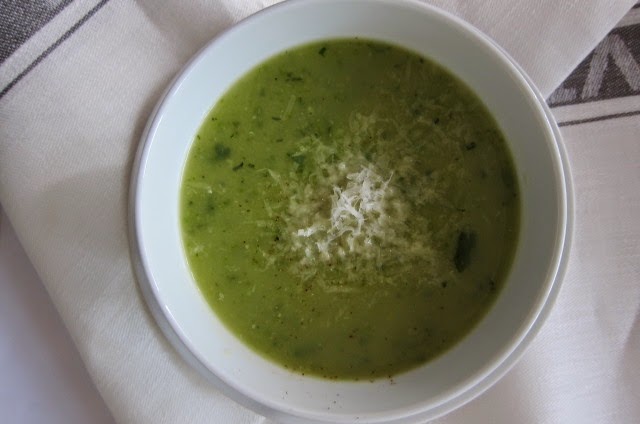
If you've grown courgettes this year you'll know what a great year it's been for this crop.  If you have friends growing them you will, by now, be less and less tactfully declining yet another offering.  For this reason you can never have too many courgette recipes up your sleeve.  This year I've resorted to giving courgettes away by the bagful together with a copy of this brilliant recipe for a surprisingly creamy Courgette, Basil and Parmesan Soup below (with heartfelt thanks to Lindsey Bareham).  If you are new to vegetable growing, courgettes are a great crop to start with.  Don't plant them closer than 1 metre apart, give them a good dousing of water every couple of days if rain is sparse or non-existent, and they will romp away.  Personally I have neither the patience nor the space to grow them from seed indoors so I plant the seeds straight into the ground in mid-May.  They will be ready to pick from mid-July and can go on until end of September.


Courgette Soup

This year I've grown three varieties but the yellow Soleil is by far the tastiest, taking on a lovely nutty, caramel flavour when sliced and cooked on a hot griddle.  If you grow the round Italian Ronda de Nizza, as I did, keep a close eye on them as they can erupt from cricket ball (the perfect size) to football in the blink of an eye.  If this happens to you, with whatever variety, you need never again think of that ghastly fallback 'stuffed marrow'.  This soup recipe will accommodate the overblown monsters happily and be far more rewarding of your effort.


Courgette, Basil and Parmesan Soup (a Lindsey Bareham recipe)
(serves 4-6.  Good hot or cold))

750g courgette or marrow
125g spring onions or 1 medium onion
25g butter
2 medium-sized new potatoes
1 garlic clove
Half a lemon
750ml light chicken or vegetable stock
20 basil leaves
4 tblsp freshly grated parmesan

Trim and grate the courgette.  Spread in a colander and sprinkle with 1 tblsp of salt, leave to dry out.  Trim and finely slice the onions.  Melt the butter in a spacious pan, stir in the onions, season, cover and cook, stirring occasionally, over a medim-low heat for about 10 minutes until slippery soft. 

Scrape the potatoes and chop small.  Crush the garlic.  Remove the zest from half the lemon.  Stir potatoes, garlic and lemon zest into the soft onion, cover and cook for a couple more minutes. 

If using stock cubes, dissolve in 750ml of boiling water. 

Squeeze as much liquid as possible out of the grated courgette and add to the pan.  Cook, uncovered, for 2-3 minutes and add the stock.  Bring to the boil and cook, partially covered, for about 5 minutes until the potatoes are tender.  Add the basil then blitz.  Stir in the parmesan, taste and adjust the seasoning with salt, pepper and lemon. 

Nb.  If you don't have basil, thyme works but there's no doubt that the use of basil makes this recipe special.

Sunday, 19 September 2010

Bristol Organic Food Festival

The Community Farm
at Bristol Organic Food Fair

After visiting Bristol Organic Food Fair for the first time last Sunday I'm left feeling if I could visit only one during the year this would be it.  Held in the fantastic setting of the regenerated Harbourside, the event was well organised, had a great family atmosphere and really interesting producers.  The standard of organic food represented was high.  Laverstoke Park, Dove Farm, Pertwood Organics, Helen Browning's Organic Meat, Riverford Organic Vegetables, Yeo Valley (a sponsor) and Roskilly Ice-creams amongst the better known producers.  The less widely known Wootton Organic Dairy, Brown Cow Organics, The Ham and Cheese Company and the Cornish based Origin Coffee were there too.

Bath-based Richard Bertinet had a stand promoting his excellent breads and cookery school and provided a hugely entertaining and educational session in the demonstration kitchen.  Producing a pan of Moules Mariniere, a fougasse, and giving a masterclass in bread making with the help of two amateurs, he managed a "loaves and fishes" feat to ensure everyone got a taste. He even enlisted Cono Sur Chilean wines to provide a sauvignon blanc to wash it down.  Bertinet rightly picked up the Soil Association "Best Bread Award" for his sourdough.  Having watched Richard Bertinet and tasted his bread, I can't wait to sign up for a bread-making class myself.

Considering the festival was billed as a 'food' festival, non-food stands were in abundance.  I am still a little bemused by a stand which was offering a household spray to wash salad, fruit and veg - why would you want to do that?  What's wrong with water? 
 
The Festival was a showcase for groups like the one pictured above.  The Community Farm located in nearby Chew Magna, is a not for profit project which aims to connect people with the land and the food they eat.  Another stand with an interesting idea was Swapcrop - a website to bring together people who have grown excess fruit and veg with makers of home-made jams and preserves.

Local musicians and an Aussie sheep-shearer competed to provide entertainment, but I think the sheep with the dreds won.  Mark this is in your diary for 2011.

Take a look at these:
http://www.thecommunityfarm.co.uk/
http://www.swapcrop.co.uk/getswapping/
http://www.thebertinetkitchen.com/

Thursday, 16 September 2010

The Bermondsey Trail

1 Ropewalk, Bermondsey
Railway Arches SE1

For some time trains to and from London Bridge station have rolled above the cheese maturing caverns of Neal's Yard Dairy and the roasting hub of Monmouth Coffee, but over the past few months more has been stirring under the railway arches than irresistable aromas.  Monmouth Coffee was the first to draw discerning coffee drinkers to Maltby Street on Saturday mornings.  Soon a tall guy named Harry added a select collection from Neal's Yard dairy and St John's breads to the draw.  Next came biodynamic fruit, veg and meats courtesy of Fern Verrow, a Kase Swiss cheese stall and Topolski with sausages and pickles.  Then another arch opened 100m further up at 1 Rope Walk offering retail sales of delicious proscuitto and mozzarella, parmesan, salamis and chorizo from Elliott at The Ham and Cheese Company.  This space is shared with The Kernel Brewery, where Evin brews beers in his micro-brewery, and with Bill at Kappacasein making experimental cheeses such as Bermondsey Frier from his little cheesemaking room.  Saturday mornings at 'Maltby Street' became irresistible to those in the know. 

Fragolina Grape Cupcake
from Violet Cakes
The past month has seen Fern Verrow move to Stanworth Street to share an arch with The Borough Cheese Company, selling French Comte. Now we have the shock move of Tony Booth, cutting his long ties with Borough Market to trade his wholesale and retail fruit and veg business from Druid Street.  Most recently Kase Swiss, Topolski, and Hophurst Farm (naked oats and delicious meats) are trading from Druid Street too, sometimes welcoming in guest producers such as East London-based Claire Ptak's 'Violet Cakes'.  Pictured above is a Fragolina grape cupcake - vanilla sponge was a little dry but delicately flavoured with good vanilla extract and, thankfully, not too sweet.  The butter icing was deeply and satisfyingly fragranced by this unusual variety of grape.  So why do other bakers think cupcakes have to be toothachingly sugary? (see my post of 3/9/2010).

Currently this is a Saturday only shop - get there early, the core hours are 9-2.  Last Saturday for the first time I managed to do a full shop on this Bermondsey trail.

UPDATE NOVEMBER 2011 - Happily now that the management of Borough market has changed, Kappacasein, The Borough Cheese Company and Topolski have returned to stalls at Borough Market (still open at their Bermondsey arches on Saturdays).   

UPDATE SEPTEMBER 2012 - MOST OF THESE TRADERS HAVE NOW MOVED 5 MINUTES UP THE LINE TO SPA TERMINUS - MAP HERE http://www.maltbystreet.com/


Wednesday, 15 September 2010

Ludlow Food Festival

Ludlow Food Festival, 10-12 September 2010

The setting of Ludlow Castle provided a beautiful backdrop to the 2010 Ludlow Food Festival, if a somewhat sprawling layout.  Two circuits were needed to ensure you had seen all 130 small independent food and drink producers drawn from the Marches (the England/Wales border country) to this the 15th annual festival.  Despite these days attracting an international audience, it still manages to retain a local village fete feel.  Not only were there Awards for 'The Festival Sausage' and 'The Festival Loaf', but also for the winner of the 'Home Bread Makers Competition' and the 'Ludlow Window Dressing Competition'. 

As far as the stallholders were concerned, the Festival certainly showed this area has plenty of quality producers.  Amongst them, Penmincae Welsh Black Beef and Lamb, Shrewsbury Bakehouse, and Stonehouse Brewery.
Rhug Organic Estates were providing classy beef and bison burgers, KK Ventures Indian food including delicious Onion Bhajis, and many a thirst was slaked by The Ludlow Brewing Company.

My vote for most interesting stand has to go to Ludlow and District Beekeepers Association.  Selling honey and beekeeping products alongside masses of information on keeping your own bees and even a comb with active bees.  Most heartwarming was the Help for Heroes stand where £2 bought you a plate of stew.  It did look suspiciously like squaddies' rations, but then why not.  Rose Prince easily took my prize for best cookery demo persuading everyone of the delights of cheaper beef cuts onglet and bavette.

There was a veritable lake of beer, cider and perry, and the number of preserves producers had me wondering just how many jars of jam each British household must have at the back of their kitchen cupboards. Blustery, rainy weather and a flying stuffed boar's head landing at my feet told me it was time to leave.  Not my favourite food festival of the year but accessability may have coloured my judgment.  It's certainly a unique setting.

Saturday, 11 September 2010

Nose to Tail and Beyond - Eccles Cake Heaven

Inspired by St John's Eccles Cakes Recipe

My idea of mid-afternoon heaven is a pot of strong tea and an Eccles Cake at St John Bread and Wine.  Unfortunately I can't live there, but I can make my own juicy little fruit-filled parcels with a little help from Fergus Henderson's wonderfully straightforward book Nose to Tail Eating - A Kind of British Cooking.

The origins of the commercially baked Eccles Cake take us to 1793 when James Birch began selling little currant-filled pastries from his bakers shop in the small Lancashire town of Eccles. The home-baked version appeared much earlier.  It's traditional to slash the top of the cake three times to signify the holy trinity.  When they came to power in 1650, Cromwell's puritans thought them so rich and delicious that they banned them.  Well, no wonder they are so popular! 

The recipe is fiercely debated, but if cooking didn't evolve would we find it so interesting? What is certain is that what is needed is pastry, currants, butter, sugar and spices.  Fergus deflects any criticism from purists by making it clear from the outset that his recipe is for St John's Eccles Cakes.  Instead of lard in the pastry, which surely would have been used originally (and you would expect it to be used at St John if anywhere), he has opted for a classic butter puff pastry, with allspice and nutmeg as spicing.  Having made and eaten Eccles Cakes as a child, my vote goes to Fergus every time. 

Pastry made and resting in the fridge, I set about the currants, sugar and spice mixture.  The smell was so good I got impatient waiting for it to cool down and resorted to the ice-box for a quick blast of cold air.  My instinct is always to roll pastry as thinly as possible so I failed to follow the instructions to roll it to only 8mm thick.  This made for an interesting time trying not to overstretch the pastry to bursting point when forming my little fragrant bundles - by handling them as little as possible I just got away with it.  Realising my error, I experimented rolling the pastry for the next a little thicker then the next thicker still. 

The thin pastry ones (right of pic) disappeared in three heavenly bites.  They probably won out for deliciousness as the thicker versions used re-rolled pastry (never a good idea) and some would justifiably consider the balance of pastry and filling to be very wrong.

A note about the recipe: I feel the sugar for dipping is better granulated or demerara than caster, and I found 200oC was the right heat for baking (Fergus' recipe states medium to hot).  Also,the recipe I have shown here incorporates Fergus' change to the assembly of the cakes as set out in his second book (Beyond Nose to Tail) written with his brilliant baker, Justin Piers Gellatly.

St John's Eccles Cakes
Makes at least a dozen cakes depending how thin you decide to roll it - if you have pastry left over it freezes very well.

PASTRY:
125g (4 oz) cold butter (butter A), cold from the fridge
500g (18oz) strong white flour
A pinch of salt
250ml (9fl oz) of water
375g (14oz) unsalted butter (butter B), cold from the fridge

FILLING:
50g (1½ oz)unsalted butter
100g (3½ oz)dark brown sugar
200g (7oz) currants
1 tsp ground alspice
1 tsp grated nutmeg

GLAZE:
1 egg white, beaten with a fork
a shallow bowl of caster or granulated sugar

TO MAKE THE PUFF PASTRY:  Mix butter A with the flour and salt using your fingers until the mixture resembles breadcrumbs, then cautiously add the water and mix until you have a firm paste.  Pat into a square and wrap in clingfilm.  Leave to rest in the fridge for at least 1 hour before using.

Once rested, roll the paste into a rectangle about 8mm thick, then beat butter B between greasproof paper into a rectangle  smaller than half the paste rectangle.  Lay the butter on the paste, leaving a space at the end.  Fold the unbuttered half over the butter and fold the edges over, so you now have butter in a paste package.  Pat square, wrap in cling film, and allow to rest in the fridge for at least 15 minutes.

Roll out into a rectangle in the opposite direction to your initial major fold (each time you roll out the pastry to fold, turn your pastry and roll across the previous direction you rolled, you will have to sprinkle flour on the surface of your rolling pin - it is very important to dust the flour off the paste before folding it at every turn in the process).  Once the pastry is approximately 1cm to 1.5cm thick, fold like a traditional letter, with one end of the rectangle to the to the halfway mark, and the other end over this.  Pat square and place in the fridge for at least 15 minutes to rest again.  Repeat this process two more times, but no more.  Return to the fridge and rest for at least 1 hour.  

TO MAKE THE FILLING:  Melt the butter and sugar together, add the dry ingredients, mix well, and leave to cool. 
Preheat your oven to 200oC/gas 6.

TO MAKE THE ECCLES CAKES:  Roll the puff pastry out to 8mm thick and cut circles approximately 10cm in diameter.  Place a blob of your filling mixture in the centre of the circle and pull up the side of the pastry to cover the filling.  Seal it with your fingers, then turn it over and slash the top 3 times.  Paint the top with the egg white, then sprinkle the sugar over.  Bake for 15-20 minutes.  They can be eaten hot or cold but slightly warm is best of all.  Lancashire cheese is a traditional accompaniment.

Inspired by and adapted from Nose to Tail Eating (Fergus Henderson) and Beyond Nose to Tail (Fergus Henderson and Justin Piers Gellatly)  

Wednesday, 8 September 2010

From Polpo to Polpetto

Having loved Russell Norman's Venetian bacari inspired Polpo, on Soho's Beak Street, on several visits since it opened in late 2009, I just had to check out his new place Upstairs at The French House on nearby Dean Street.  Cutely named Polpetto, this smaller version opened in late August.  Lacking the atmosphere enhancing bar of Polpo (simply no space), I was sceptical whether they could import the feel of the original but as the food arrived I soon forgot all about the lack of a bar.  This little sister differentiates itself by the label osteria, rather than bacaro (definitions seem a little fluid so in my book the former is a humble place to enjoy food and wine and the latter is a humble place to enjoy wine and food).

A rickety staircase to the side of the renowned French House pub leads to the first floor dining room.  Considering the size of the room, table spacing is pretty good. Little has been done to the room save the tiling on the ceiling and ancient-looking lighting (both Polpo trademarks).  On my visit, staff were all young and welcoming, even though we had no reservation and they were busy.  I love a place where you can actually smell the food, rather than it being whipped out of the air by air-conditioning units before you can get a sniff.  Here, everyone was checking out everyone else's plates appreciatively.

The menu is recognisable to those who have eaten at Polpo - why reinvent the wheel when it works so well.  As at Polpo, the dishes, from small palette awakening Cicheti through to the desserts such as Pannacotta, blackberries and salted hazelnut praline, are packed with flavour.  The light take on pizza, Pizzette Bianca is, if anything, even lighter and tastier than at Polpo. The Duck and porcini meatball is moist and meaty with that slight truffly flavour that porcini imparts. Even a spicy tomato sauce doesn't overpower.  A dish of  parmesan battered soft shell crab served on shaved raw fennel with a light mayo would have been perfect but for a slightly too thick batter.  Sharing is the point here and whilst you may not want to share your dish, you will want to dive into those of others at your table.  £40 goes a long way for two here.  Terrific value and an experience you will want to repeat.

Polpetto
Upstairs at The French House
49 Dean Street
Soho
London  W1D 5GB
Tel:+44 (0)20 7734 1969
http://www.polpetto.co.uk/
Open 6 days a week: Monday to Saturday for lunch and dinner, noon to 3pm and 5.30pm to 11pm.

Closed Sunday and Bank Holidays.
Reservations are taken for lunch only
Reservations are not taken for dinner. Tables are allocated on arrival, first come first served.

Saturday, 4 September 2010

Sexed-up Cupcakes - Cox Cookies & Cake

Pop Cake - Marilyn

Given the press coverage Patrick Cox’s cake shop has attracted in the run-up to opening, I just had to take a peek. As it turned out I stepped over the threshold on Soho’s Brewer Street within 2 hours of its opening. Now Brewer Street, for those of you who don’t know, is known more for its sex shops than its food but I have to say the shop fits right in. I did a double take at a window with the familiar neon lights (I must stress here that I’m normally just passing through) when my eyes fixed on a blood red cupcake within a red neon square. Inside is all shimmering blackness with staff decked out in black, studded, leather bondage aprons. This either sounds intriguing or off-putting, depending on your point of view, but honestly stylewise the place works brilliantly. On their first day they were missing the glass display cases and, even though all they had for sale were baker Eric Lanlard’s cupcakes displayed on individual black paper napkins, they were attracting a steady stream of customers into the chamber.

As you can see from the photo, the cupcakes did look appealing so I allowed myself to be seduced. Unfortunately I didn’t check the pricing carefully enough - another trait which makes the shop fit right in to the area (I understand) – so instead of buying a “Classic” at £2.50 I walked out with a nicely packaged speciality “Pop Cake” at £4.00. According to the description, it is a “vanilla with an oozy blueberry compote centre, vanilla frosting topped with a delicious white chocolate homage to Warhol’s Marilyn.” The sponge was light and sweet. The compote was sparse and sweet. The frosting did indeed taste of vanilla and was very sweet. It was good in a sugar rush sort of way, but left me feeling a little bit dirty.

Now I have to admit I’m not a connoisseur of cup cakes, and given that almost everyone seems to think they are now so ’over’, I’m a bit surprised that the creative Cox hasn’t come up with something more original. However, I gather when the shop gets into its stride we can look forward to Chocolate Brownies, Toffee Almond Cookies, Mrs Nickolchuk’s Nanaimo Squares and three “Soho Specials” – Titty Cake, Bum Cake and Beef Cake.

Go and take a look. Just make sure you go in the right door!
13 Brewer Street, Soho, London W1F 0RH
www.coxcookiesandcake.com  UPDATE FEBRUARY 2012 - SHOP CLOSED!